학부정보 | 교육학부 | 테이쿄대학 | 일본의 유학 정보라면 JPSS



Scholarship Opportunity for Scout Users Only (Enrollment Period Required)


일본 유학 정보 사이트JPSS > 도쿄도의 대학에서 유학지를 찾기 > 테이쿄대학 > 교육학부
테이쿄대학 유학을 생각하고 계시는 분들께 JAPAN STUDY SUPPORT는 재단법인 아시아학생문화협회와 주식회사 베네세코퍼레이션이 공동운영하고 있는 외국인 유학생을 위한 일본유학정보 사이트입니다. 테이쿄대학 문학부 학부및경제학부 학부및법학부 학부및이공학부 학부및외국어학부 학부및교육학부 학부 등 학부 별 상세 정보도 게재하고 있기 때문에, 테이쿄대학 관한 유학정보를 찾고 계시는 분들은 꼭 이용해 보시기 바랍니다. 이 외에도 외국인 유학생을 모집을 하고 있는 1,300여 개의 대학・대학원・단기대학・전문학교의 정보도 게재하고ㅇ 있습니다.
間もなく出願開始!
帝京大学では、幅広い分野から自分の興味や将来の目標に合わせて学部・学科を選ぶことができます。
■八王子キャンパス:経済学部/法学部/文学部/外国語学部/教育学部
■宇都宮キャンパス:経済学部 地域経済学科/理工学部
これらの学部・学科を対象とした2027年度留学生特別選抜の出願がまもなく始まります。
■試験の種類
・自己推薦方式:書類審査および口頭試問
・A方式:日本語の問題<筆記試験>
・B方式:日本留学試験成績利用
※自己推薦方式はⅠ期のみ実施します。
※学部・学科により試験内容が異なります。
■出願期間
Ⅰ期:2026年10月7日(水)~10月15日(木)
Ⅱ期:2027年1月5日(火)~1月12日(火)
詳細は、2027年度留学生特別入試要項をご覧ください。
https://www.teikyo-u.ac.jp/applicants/international/nonnative
帝京大学 Teikyo University
【JP】https://www.jpss.jp/ja/univ/314/
【EN】https://www.jpss.jp/en/univ/314/
kokusai@teikyo-u.ac.jp






Students in the Faculty of Education will learn perspectives of education and research for use in in schools as well as out into society and the world at large, with studies broadly covering people, education, and society. From the outset of their first year, students take part in hands-on programs in educational settings to allow each student to develop their own interests and talents. Students will raise awareness of their surroundings and build self-sufficiency by working together and learning from one another. These efforts organically link to their practical, clinical studies to build their foundation as educators.
https://www.teikyo-u.ac.jp/faculties/education/education
Students will broaden their perspectives through "Issues in Modern Education" courses common to all Faculty of Education programs, and practical, clinical learning through on-site and volunteer programs is also emphasized.
https://www.teikyo-u.ac.jp/faculties/education/education_program
In the Department of Education and Culture, students work together with local residents through social education projects at community centers and through a variety of other fieldwork, to acquire skills that will enable them to become immediate assets in the real world.
https://www.teikyo-u.ac.jp/faculties/education/seminar
One distinguishing feature of Teikyo University is the flexibility given to its students to study in fields of their interest outside of their faculty or department. Many of the classes offered in the Faculties of Economics, Law, Liberal Arts, Language Studies, and Education as well as the Junior College at the Hachioji Campus may be taken by any student as an elective course, and up to 34 credits acquired in this way can be applied to graduation requirements.
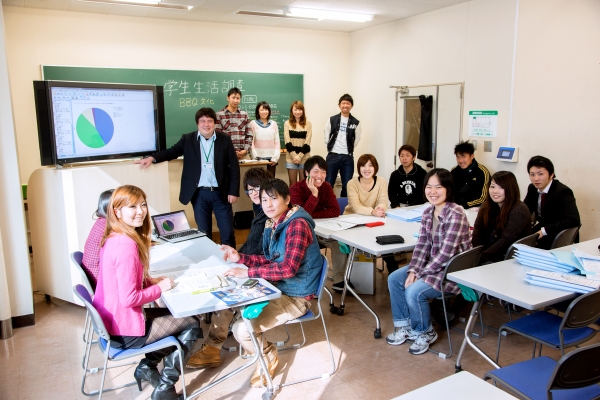
An educational approach developed by surveying students' daily lives
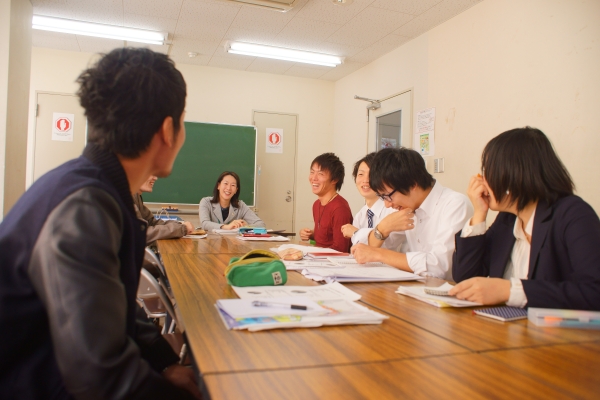
In seminars, students engage in lively debates with each other.

Students learn the basics of pedagogy from their first year. The diverse curriculum provides opportunities for graduates to proceed on to work in a variety of educational areas, such as in lifelong learning facilities and businesses.
https://www.teikyo-u.ac.jp/faculties/education/c_education
By learning to independently identify and solve educational issues, students acquire wide-ranging knowledge beyond their field of specialization, as well as the intellectual processes for making use of that knowledge.