Informasi fakultas | Faculty of Humanities and Social Sciences | Tokyo Metrop...



Scholarship Opportunity for Scout Users Only (Enrollment Period Required)


JPSS, Informasi universitas dan pasca sarjana di Jepang > Mencari tempat belajar sekolah dari Tokyo Universitas > Tokyo Metropolitan University > Faculty of Humanities and Social Sciences
Bagi Anda yang ingin melanjutkan studi ke Tokyo Metropolitan University. JAPAN STUDY SUPPORT merupakan situs informasi studi di Jepang untuk para pelajar/mahasiswa(i) mancanegara yang dikelola bersama oleh The Asian Students Cultural Association (ABK) dan Benesse Corp. Kami menyediakan informasi rinci per fakultas, termasuk Fakultas Faculty of Humanities and Social SciencesatauFakultas Faculty of Urban Environmental SciencesatauFakultas Faculty of Systems DesignatauFakultas Faculty of LawatauFakultas Faculty of Economics and Business AdministrationatauFakultas Faculty of ScienceatauFakultas Faculty of Health Sciences, Tokyo Metropolitan University. Bagi yang mencari informasi melanjutkan studi ke Tokyo Metropolitan University, silakan memanfaatkannya. Selain itu, kami juga menyediakan informasi sekitar 1300 universitas, pascasarjana, universitas yunior, akademi kejuruan yang siap menerima mahasiswa(i) mancanegara.
 Tokyo / Sekolah lokal pablik

2027 Application Guidelines for the Entrance Examination for International Students
https://www.tmu.ac.jp/extra/download.html?d=assets/files/download/entrance/guide/2026/2027_tsg_bosyuuyoukou.pdf






As members of society, how should we interact with society in the real world? The Faculty of Humanities and Social Sciences can help you cultivate the knowledge and thinking skills needed to be able to find answers to this kind of question. The Faculty undertakes research in a wide range of fields, including human psychology, education, languages, literature, philosophical thought, history, social studies and cultural studies.
The circumstances in which we lead our lives are changing all the time. As a member of this kind of constantly changing society, what can we do, and what should we do? The goal of the Faculty of Humanities and Social Sciences is to explore and research methods for achieving the kind of society in which people can feel hope, and to try to put these methods into practice.
The Faculty of Humanities and Social Sciences has two departments: the Department of Human and Social Sciences and the Department of Humanities. While differing in the approach taken, these two departments have the same basic aims. The Faculty of Humanities and Social Sciences covers 15 individual fields of study. The reason for covering such a wide range of fields is the desire to help students acquire broad-ranging knowledge, as well as the ability to view phenomena from different perspectives and think from different viewpoints, which will help students cultivate the ability to make judgements.
https://www.tmu.ac.jp/english/education/faculty/hum.html

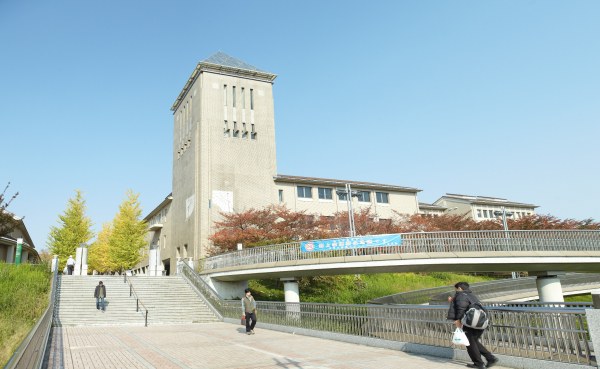
The TMU Campus
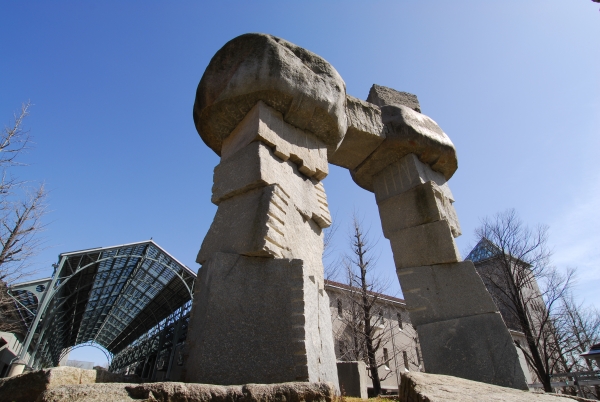
Monument of the University’s Symbol

Lectures


The social studies discipline examines the relationship between people and society from a social science perspective. It seeks to cultivate in students a broadminded attitude toward the differing values that different communities have elaborated, a willingness to undertake thorough fieldwork, precise information-gathering abilities and critical thinking skills to enable them to address the various problems that affect contemporary society. In this field of study, it is possible to acquire—through social investigation, practical training, etc.—the problem-solving skills needed to tackle (from both theoretical and practical approaches) the issues affecting people and society. Majoring in social studies not only helps students to acquire the basic requirements of a cultivated, well-rounded member of society, but is also directly useful for choosing the career that one wishes to follow in the future.
Humanities comprise philosophy (the origin of all academic disciplines) as well as related humanities subjects. Humanities encompass a wide range of fields, including the Western classical authors of Greece and Rome, archeology and history with their study of humanity’s past, the cultures of the five major linguistic families (which have been a main source of art and literature, etc.), and the new field of cultural representation theory, which emphasizes research theory.
The curriculum in the Department of Humanities attaches great importance to freedom and self-directedness which are fundamental aspects of university education, encouraging students not only to acquire knowledge in individual fields, but also to actively pursue interdisciplinary learning that straddles different fields of study, for example by combining history and philosophical thought, religion and sociology, language and culture, or temporal and spatial approaches.